

Surging Subsidies for Enhanced Oil Recovery: High Taxpayer Cost, No Climate Benefit
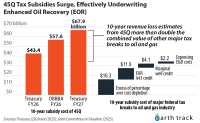
Carbon Capture, Utilization and Storage (CCUS) is frequently presented as a climate solution. In reality, the technology is heavily subsidized and to date has almost always been used for Enhanced Oil Recovery (EOR) to extract additional oil from declining wells. Subsidizing EOR is a climate negative. The 45Q tax credit is the main subsidy to CCUS and heavily supports the fossil fuel sector -- more than 90% of CO2 supply through 2050 according to US Energy Information Administration. The US Treasury’s projected revenue losses from 45Q are growing rapidly, with an estimated cost of $67.9 billion over the 2026-2035 period. This greatly exceeds the projected cost of other tax breaks to oil and gas for the 2026-2035 period, even when the total 45Q value is pro-rated to exclude carbon oxides not from fossil fuel extraction or power production. The use of this subsidy to support increasing oil production raises concerns that it is undermining broader climate goals. Ending 45Q eligibility for enhanced oil recovery would stem wasteful use of public resources that does little to address long-term decarbonization challenges.