

Paying for Climate Chaos: U.S. Federal Subsidies for Fossil Fuel Production
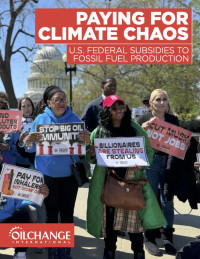
The scale of federal subsidies for fossil fuel production remain staggering, at nearly $35 billion per year. The subsidies, which divert needed funds from critical social services, come in the form of tax breaks, below-market access to drilling on public lands, regulatory loopholes, direct spending to clean up the industry’s mess, and more. The report also contains the most comprehensive list to date of the more than $4 billion in new fossil fuel subsidies added this year by Congress via the "One Big Beautiful Bill" (OBBA) that passed in July. This brings fossil fuel production subsidies to more than double what the U.S. government was giving the industry in 2017, when Oil Change International last studied the matter.
This figure is a conservative estimate. The reality is likely much higher given a continuing lack of accessible, reliable data. The estimate excludes tens of billions of annual state, county, and municipal subsidies for fossil fuel production as well as federal support in the form of international public finance, military expenditures to protect fossil fuel supply or markets, and environmental and health costs of fossil fuel pollution.
The report shows that fossil fuel companies, which spend millions every year in lobbying, receive a 30,000% return on investment as subsidies.The federal dollars claimed by the industry come at the expense of funding for essential programs for working families. OBBA, widely acknowledged as the most regressive and anti-environmental piece of legislation in many decades, added massive new subsidies for fossil fuels; these were partly funded via devastating cuts to SNAP, Medicaid, and clean energy programs.
Of particular importance, many of the subsidies identified are projected to soar over the next decade and beyond. Absent legislative action, these can transfer hundreds of billions of dollars to the oil and gas industry. This is due to the recent introduction of new subsidies for carbon capture, utilization, and storage and hydrogen, which increase fossil fuel production. The overwhelming majority of captured carbon, for example, is used to extract otherwise unreachable oil deposits, a process known as “enhanced oil recovery.” This incremental oil is soon burned itself.